A bright smile is often associated with health and confidence. It's no surprise that changes in teeth colour are one of the most common cosmetic concerns among dental patients.
If your teeth don't look as bright as they used to, you're probably wondering why. Is it something you've been eating or drinking? Is it simply part of getting older? Or is there something else behind the change? The answer isn't always as straightforward as it seems.
· The difference between surface stains and teeth discolouration
· Why not every change in teeth colour is caused by what you eat or drink
· What else may be causing your teeth to change colour
· How to help prevent stains without giving up your favourite foods and drinks
· When whitening or other professional treatments may be the right solution
Most people describe any change in the colour of their teeth as a stain. And in everyday conversation, that's completely normal. In dentistry, however, professionals often use the broader term teeth discolouration, because not every colour change is caused by surface stains.
According to a literature review by Watts and Addy, published in the British Dental Journal, teeth discolouration can generally be classified into two main categories: extrinsic and intrinsic discolouration. Understanding the difference between them can help explain why some changes in teeth colour respond well to whitening treatments, while others require a different approach.
Extrinsic stains affect the outer surface of the teeth, known as the enamel. They develop when pigments from foods, drinks, tobacco, or other external sources build up over time. Because they remain on the surface, they're often easier to prevent and are the type of stain most commonly improved with professional cleanings or teeth whitening.
Intrinsic discolouration occurs within the teeth itself, affecting the dentin beneath the enamel rather than the surface. Instead of being caused by external pigments, it develops because of changes inside the teeth. As a result, it typically can't be removed with brushing alone and may require different cosmetic or restorative treatments.
Since this article focuses on foods and drinks that stain teeth, we'll be talking primarily about extrinsic stains and the everyday habits that contribute to them.
Have you ever wondered why coffee is more likely to stain your teeth than milk, or why some brightly coloured foods don't seem to leave much of a mark? The answer isn't simply their colour. It depends on how certain compounds interact with the surface of your teeth.
According to a review published in the Saudi Dental Journal, the outer surface of teeth is covered by a thin protein layer called the acquired pellicle. Rather than attaching directly to the enamel, many pigments first bind to this protective layer. As these pigments accumulate over time, they become more noticeable, leading to the surface stains known as extrinsic stains.
Several characteristics make certain foods and drinks more likely to stain your teeth.
Chromogens are highly pigmented compounds that give many foods and beverages their rich colour. Coffee, tea, berries, red wine, soy sauce, and balsamic vinegar are all good examples.
A critical review of modern teeth whitening explains that these pigments can become trapped within the acquired pellicle and other deposits on the teeth surface. Over time, repeated exposure allows the pigments to accumulate, making teeth appear darker or more yellow.
Tannins are naturally occurring plant compounds found in foods and beverages such as black tea, coffee, red wine, and some fruits.
While tannins aren't pigments themselves, they make it easier for chromogens to stick to the teeth's surface. Research has shown that beverages rich in tannins are among the most common contributors to extrinsic teeth staining because they increase the adhesion of pigments to the acquired pellicle.
Acidic foods and drinks don't necessarily stain teeth on their own. Instead, they can temporarily soften the enamel surface and, with frequent exposure, contribute to enamel erosion.
As enamel becomes rougher or thinner, pigments from other foods and beverages may adhere more easily or become more noticeable. For this reason, acidic drinks like soft drinks, citrus juices, and sports drinks can indirectly increase the risk of staining, especially when consumed alongside highly pigmented beverages.

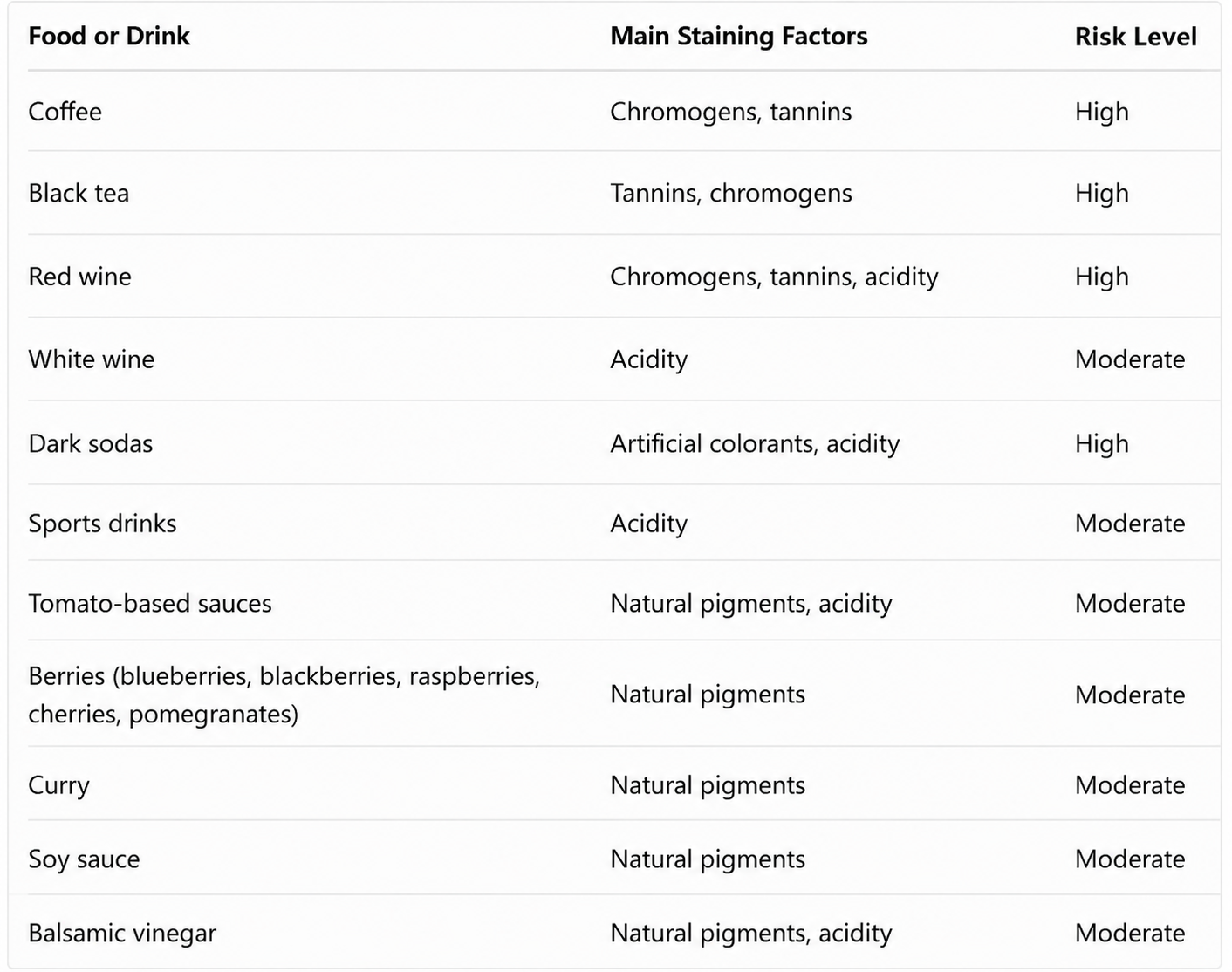
Almost any deeply pigmented food has the potential to leave surface stains over time. However, some foods and beverages are more commonly associated with teeth discolouration because they combine dark pigments, tannins, or acidity.
Coffee is one of the most well-known causes of teeth staining.
Its dark pigments readily attach to the enamel, while naturally occurring tannins help those pigments remain on the teeth surface. Drinking coffee daily doesn't necessarily damage your teeth, but repeated exposure over time can gradually lead to yellow or brown surface stains.
Adding milk may slightly reduce the staining potential by diluting some of the pigments, but it doesn't eliminate the effect completely.
Many people are surprised to learn that tea can stain teeth just as much, or even more, than coffee.
Black tea generally has the greatest staining potential because it contains high levels of tannins. Green tea and herbal teas may also contribute to discolouration over time, although their effects tend to be less pronounced depending on the variety.
Because tea is often consumed slowly throughout the day, the teeth may remain exposed to staining compounds for longer periods.
Red wine is well known for staining teeth because it combines all three major staining factors: dark chromogens, tannins, and acidity.
White wine may seem like a safer choice because it contains fewer pigments, but its acidity can temporarily soften the enamel, making it easier for pigments from other foods consumed afterward to adhere to the teeth.
Dark-coloured soft drinks contain artificial colourants that may contribute to surface staining. Many are also highly acidic, which increases the risk of enamel erosion over time.
Even lighter-coloured sports drinks and energy drinks deserve attention. Although they may not contain dark pigments, their acidity can make the enamel more susceptible to future staining.
Tomato sauce combines a rich red pigment with natural acidity, making it another common contributor to extrinsic stains.
Frequent consumption, especially without rinsing with water afterward, may gradually increase surface discolouration.
Blueberries, blackberries, raspberries, cherries, and pomegranates are packed with antioxidants and offer many nutritional benefits.
Their deep natural pigments, however, can temporarily adhere to the enamel, particularly if plaque is present. Fortunately, the health benefits of these fruits far outweigh their staining potential, making good oral hygiene a far better solution than avoiding them altogether.
Highly pigmented condiments and seasonings can also contribute to staining.
Curry contains strong yellow-orange pigments, soy sauce is deeply coloured, and balsamic vinegar combines dark pigments with acidity. While these foods are typically eaten in smaller amounts than beverages like coffee or tea, frequent consumption may still contribute to gradual discolouration over time.
Although foods and drinks are among the most common causes of extrinsic stains, they're not the only reason your teeth may change color.
In many cases, discolouration develops because of natural aging, certain medications, dental trauma, tobacco use, or changes that occur within the teeth themselves. Understanding these factors can help determine whether whitening is likely to be effective or whether another type of treatment may be needed.
As we get older, the outer enamel naturally becomes thinner through years of chewing and everyday wear. As this happens, the yellowish dentin underneath becomes more visible, making teeth appear darker even when they're healthy.
This gradual change is considered a normal part of the aging process and is one of the most common causes of intrinsic discolouration.
Smoking and other tobacco products are among the leading causes of persistent teeth stains. Tar and nicotine readily accumulate on the acquired pellicle and enamel, often creating yellow, brown, or even black discolouration over time.
The longer and more frequently tobacco is used, the more difficult these stains may become to remove through routine brushing alone.
Some medications can affect teeth colour either during teeth development or later in life. Tetracycline antibiotics, for example, are well known for causing intrinsic discolouration when taken while permanent teeth are still developing. Certain mouth rinses containing chlorhexidine may also contribute to temporary surface staining with prolonged use.
An injury to a tooth can damage its internal tissues, sometimes causing it to appear gray, brown, or darker than the surrounding teeth. Unlike surface stains, this type of discolouration originates from within the tooth and often requires professional evaluation to determine the most appropriate treatment.
Excessive fluoride exposure while permanent teeth are developing may lead to dental fluorosis. Depending on its severity, fluorosis can appear as faint white streaks, opaque patches, or darker discolouration. While mild fluorosis is primarily a cosmetic concern, more severe cases may require restorative or cosmetic treatment to improve the appearance of the teeth.
If you're unsure what's causing your teeth to change colour, a comprehensive oral examination is the best way to determine whether the discolouration is external, internal, or a combination of both. Identifying the underlying cause is the first step toward choosing the most appropriate treatment.
Yes. You don't have to eliminate coffee, tea, berries, or red wine from your diet to help prevent teeth stains. Most food stains develop gradually, meaning small daily habits can significantly reduce the amount of pigment that builds up on your teeth over time.
Here are some simple ways to help prevent food stains:
· Rinse your mouth with water after consuming highly pigmented foods or drinks.
· Avoid sipping coffee, tea, or other staining beverages over long periods, as prolonged contact gives pigments more time to adhere to your teeth.
· Use a straw when drinking iced coffee, tea, or dark-coloured beverages whenever possible.
· Wait about 30 minutes before brushing after consuming acidic foods or drinks. Brushing immediately afterward may contribute to enamel wear.
· Brush twice a day and floss daily to remove plaque, which provides more surfaces for pigments to accumulate.
· Schedule regular professional dental cleanings to remove surface stains before they become more noticeable.
Rather than avoiding nutritious foods like berries or tomato-based dishes, focus on maintaining good oral hygiene and enjoying these foods in moderation. Consistent daily habits are far more effective than eliminating healthy foods from your diet.
In many cases, yes. The right treatment depends on the cause of the discolouration, which is why a professional evaluation is an important first step.
When discolouration is caused by surface stains, professional dental cleanings are often the first line of treatment. During a cleaning, your dentist or dental hygienist can remove plaque, tartar, and many of the surface stains that brushing alone can't eliminate.
If additional whitening is desired, professional teeth whitening treatments can help brighten the natural color of your teeth by breaking down stain-causing pigments within the enamel. Because these treatments are performed under professional supervision, they're generally more effective and predictable than over-the-counter whitening products.
Not every type of discolouration responds to whitening. When the colour change originates inside the tooth or results from factors such as aging, dental trauma, certain medications, or fluorosis, your dentist may recommend other cosmetic treatments instead.
Depending on the cause and severity of the discolouration, treatment options may include:
· Internal bleaching for certain teeth that have darkened after trauma or root canal treatment.
· Dental bonding to improve the appearance of localized discolouration.
· Porcelain veneers to cover discolouration while also improving the teeth shape and appearance.
· Dental crowns when discolouration is accompanied by significant structural damage or large restorations.
The most appropriate treatment will depend on the underlying cause of the discolouration, the condition of the teeth, and your aesthetic goals.
If over-the-counter whitening products haven't given you the results you expected, it doesn't necessarily mean they don't work. It may simply mean that whitening isn't the most appropriate treatment for your type of discolouration.
At Junction Family Dental Care, every treatment begins with a comprehensive oral examination. We'll examine your teeth, identify what's causing the discolouration, and explain our findings in a way that's easy to understand.
Once we determine the cause, we'll walk you through the treatment options available, explain the benefits of each approach, answer your questions, and help you choose the option that best aligns with your needs and smile goals. Depending on your case, treatment may include a professional dental cleaning, teeth whitening, dental bonding, veneers, crowns, or another cosmetic solution.
Ready to take the next step? Schedule an appointment with Junction Family Dental Care.